Thermage vs Ultherapy: Which One Do You Actually Need? A Dermatologist's Guide for Patients Visiting Korea
Thermage
Measurable tightening from a single session, with a very low rate of side effects.
In the original multicentre trial of 86 subjects, a single radiofrequency treatment improved periorbital wrinkles by at least one grade in 83% of treated areas on blinded photographs, with measurable brow lift in most subjects.1 A retrospective review of more than 600 treatments found only temporary side effects in 2.7% and no permanent ones.2 A 2020 international consensus on the fourth-generation system (Thermage FLX) concluded that mild to moderate laxity is the ideal indication, that most well-selected patients benefit from one treatment, and that repeating it about every 12 months is reasonable.3
Ultherapy
A real, measurable lift of the brow and lower face, strongest in mild to moderate laxity.
In a rater-blinded study of 35 patients, 86% showed a clinically significant brow lift at 90 days, averaging 1.7 mm.4 In 22 Korean patients, nasolabial folds and the jawline improved in every subject, and biopsies showed thicker dermal collagen two months after treatment.5 A 2023 systematic review of 16 studies confirmed that micro-focused ultrasound tightens mildly to moderately lax facial skin, with improvement continuing up to a year, and noted that results decline with excessive laxity or a BMI above 30.6
Both, in Korean patients
An 18-year safety review of 1,040 patients found no burns, infections or permanent complications.
The review covered 515 patients treated with micro-focused ultrasound and 525 with monopolar radiofrequency at two Korean dermatology clinics between 2005 and 2023, most of them combined with botulinum toxin or fillers.7
How we approach it
At Liftique
The device is chosen from where your laxity sits, not from which one you arrived asking for.
Before treatment your dermatologist assesses your face with 2D Mark-Vu skin analysis and 3D EVE MUSE contour imaging, then confirms the depth of fat and fascia area by area with ultrasound. Both treatments are performed by a board-certified dermatologist with a genuine single-use Thermage tip and genuine Ultherapy transducers, with the Liftique painless system (numbing cream, nerve blocks and oral analgesics at no extra cost) and LDM aftercare included. If you need only one, we tell you which one. If you need both, they are done in one visit.
Frequently asked questions
Which is better, Thermage or Ultherapy?
Neither — they treat different layers. Thermage for skin quality, Ultherapy for a dropped jawline, under-chin or brow.
The right answer depends on what has changed in your face, which is decided at consultation.
Can I do Thermage and Ultherapy on the same day?
Yes. Usually Thermage first and then Ultherapy, though the reverse order is also fine.
Plan on a longer visit and the same aftercare as for either treatment alone.
Which one hurts less?
Thermage. It feels like strong warmth with built-in cooling; Ultherapy delivers sharper heat to the deep layer.
For both, numbing cream, nerve blocks and oral painkillers are included at Liftique, and sleep sedation is available for ₩200,000 with 8 hours of fasting.
Which one has less downtime?
Thermage has almost none. Ultherapy may leave mild swelling or tenderness for one to two weeks.
Neither restricts flying or sightseeing, and neither needs a follow-up visit.
Which one lasts longer?
About the same: around a year for both, with results building over two to three months.
Many patients repeat Thermage annually and Ultherapy every 12 to 18 months.
Which one is cheaper in Korea?
It depends on the shot count. A 300-shot Ultherapy is ₩1,350,000; a 600-shot Thermage is ₩2,390,000, before VAT.
Both are generally well below typical US or UK pricing. See our guides on Thermage in Seoul and Ultherapy cost in Korea.
Individual results vary. This article is general information, not a diagnosis — the right device, shot count and combination are decided at consultation. For a detailed look at each treatment, see our guides Thermage in Seoul and Ultherapy in Seoul.
References
- Fitzpatrick R, Geronemus R, Goldberg D, et al. Multicenter study of noninvasive radiofrequency for periorbital tissue tightening. Lasers Surg Med. 2003;33(4):232-242. PubMed
- Weiss RA, Weiss MA, Munavalli G, Beasley KL. Monopolar radiofrequency facial tightening: a retrospective analysis of efficacy and safety in over 600 treatments. J Drugs Dermatol. 2006;5(8):707-712. PubMed
- Chapas A, et al. Consensus recommendations for 4th generation non-microneedling monopolar radiofrequency for skin tightening: a Delphi consensus panel. J Drugs Dermatol. 2020;19(1):20-26. PubMed
- Alam M, White LE, Martin N, et al. Ultrasound tightening of facial and neck skin: a rater-blinded prospective cohort study. J Am Acad Dermatol. 2010;62(2):262-269. PubMed
- Suh DH, Shin MK, Lee SJ, et al. Intense focused ultrasound tightening in Asian skin: clinical and pathologic results. Dermatol Surg. 2011;37(11):1595-1602. PubMed
- Contini M, Hollander MHJ, Vissink A, et al. A systematic review of the efficacy of microfocused ultrasound for facial skin tightening. Int J Environ Res Public Health. 2023;20(2):1522. PubMed
- Suh DH, Chen LC, Chung HJ, et al. An 18-year comprehensive safety study on microfocused ultrasound and monopolar radiofrequency combined with cosmetic injectables in 1,040 patients. Arch Dermatol Res. 2025;317(1):251. PubMed
Medical review
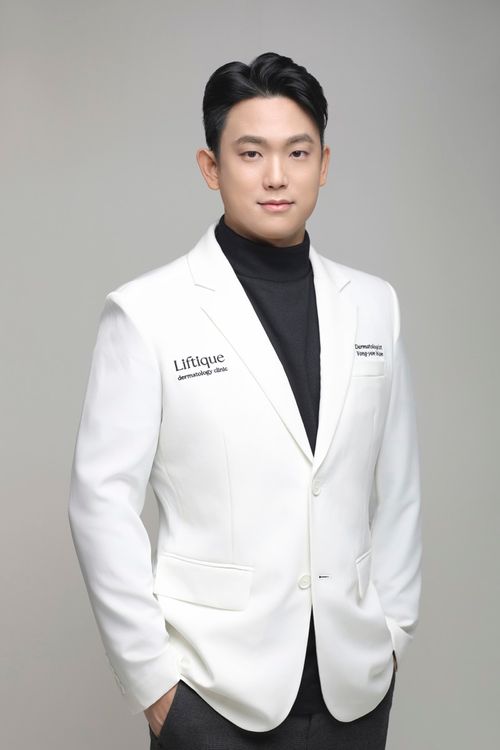
Reviewed by Dr. Yong-yon Won, Director, Liftique Dermatology Clinic — board-certified dermatologist since 2019.
Not sure whether your face needs Thermage, Ultherapy or both?
Ask a dermatologist →